
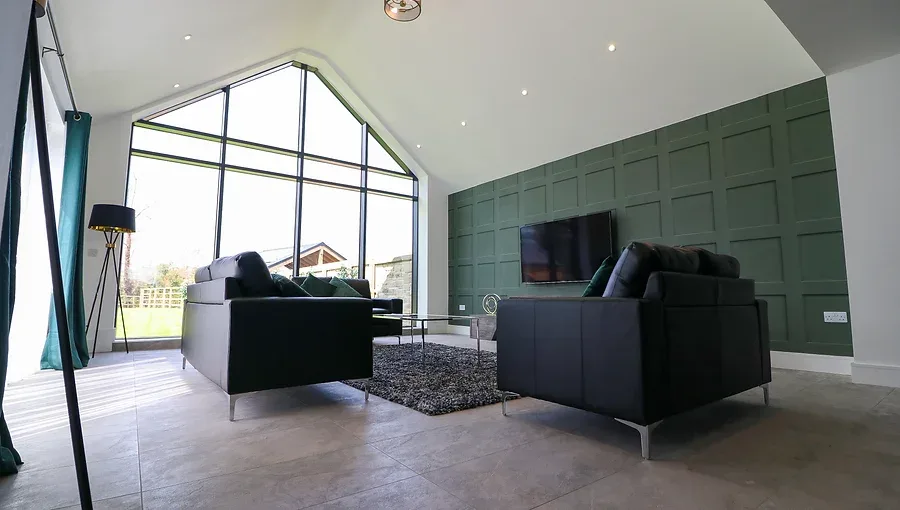
Of all the decisions a client makes during a project, knowing how to layer lighting properly is the one most likely to be left until last, even though it quietly does the most to determine whether a finished room actually feels as good as it looks in photographs. Furniture and finishes get the attention during design meetings. Lighting gets treated as an electrical afterthought, specified in a rush once the plaster is already on the walls. That order of priorities is almost always the wrong way round.
A well-lit room and a well-furnished room are not the same thing, and only one of them is genuinely liveable after dark.
How to Layer Lighting: Why It Needs Its Own Plan
Good lighting is designed in layers, and each layer needs to be decided before the electrician does the first fix, not after. Once cabling is buried in a wall or ceiling, your options shrink to whatever sockets and switch drops were planned months earlier. I ask clients to think about lighting at the same stage they think about layout, because by the time furniture arrives, the meaningful decisions have already been made, for better or worse.
The Three Lighting Layers: Ambient, Task and Accent
Every room that feels effortlessly lit is, in fact, running three separate lighting systems at once:
- Ambient light gives a room its general, even illumination, usually from ceiling fittings or diffused sources, and should never be the only thing doing the work
- Task light is aimed at what you're actually doing, reading, cooking, working, applying makeup, and is judged on function rather than mood
- Accent light is purely theatrical, drawing the eye to artwork, texture or architecture, and is usually the layer that makes a room feel designed rather than simply lit
Most rooms that feel flat or clinical are relying on ambient light alone. Most rooms that feel considered are using all three, on separate circuits, controlled independently. The right mix shifts with the room, and a handful of principles cover most residential projects.
Kitchen Lighting Layers
Kitchens need strong task light under wall cabinets and over worktops, with pendants over an island doing double duty as task and accent light. A single central flush fitting is never enough to cover the whole room properly.
Living Room Lighting Ideas
Living rooms benefit from lamps at seated eye level rather than light falling only from above. Dimmable downlights provide ambient fill, while picture or shelf lighting adds the accent layer that finishes the room.
Bedroom Lighting Ideas
Bedrooms need independently switched reading light either side of the bed, so one person can read while the other sleeps. Ambient light should stay soft, never feeling operating-theatre bright at midnight.
Bathroom Lighting Layers
Bathrooms require shadow-free vanity lighting either side of the mirror rather than above it. Any feature lighting in wet zones needs to be specified and IP-rated correctly from the outset.
Hallway and Staircase Lighting
Hallways and stairs should guide movement with lower-level, transitional light rather than announcing themselves as a destination in their own right.
The Most Common Lighting Mistake to Avoid
By far the most common issue in homes I'm asked to improve is a single source doing all the work, usually a central pendant or a grid of identical downlights installed because it was simple to specify, not because anyone worked out what each part of the room needed. It's rarely a budget problem. It's a sequencing problem: lighting decided too late to influence the electrical plan, and too late to correct without opening up a finished ceiling.
Colour Temperature and Lighting Control
Colour temperature matters more than most clients expect. Warm white, broadly 2700 to 3000 Kelvin, suits almost every residential space and flatters skin tone and furnishings alike. Cooler, crisper light has its place in kitchen prep zones and utility spaces, but used elsewhere it can make an otherwise beautiful room feel sterile. Dimmers and simple zoned control matter just as much as the fittings themselves, since the right lighting for entertaining in the evening is rarely the right lighting for a Tuesday morning.
A Simple Lighting Test Before You Commit
Before finalising a lighting plan for any room, I ask one question: if the main ceiling light were switched off, could you still comfortably do everything that room is meant for? If the answer is no, the layering isn't finished yet, regardless of how many fittings are on the schedule.
Start Your Project
If you're planning a renovation and want a lighting scheme designed alongside the rest of the interior, rather than bolted on at the end, I'd be glad to talk it through.
Rachel Buscall Interiors
Where Business Excellence Meets Design Innovation